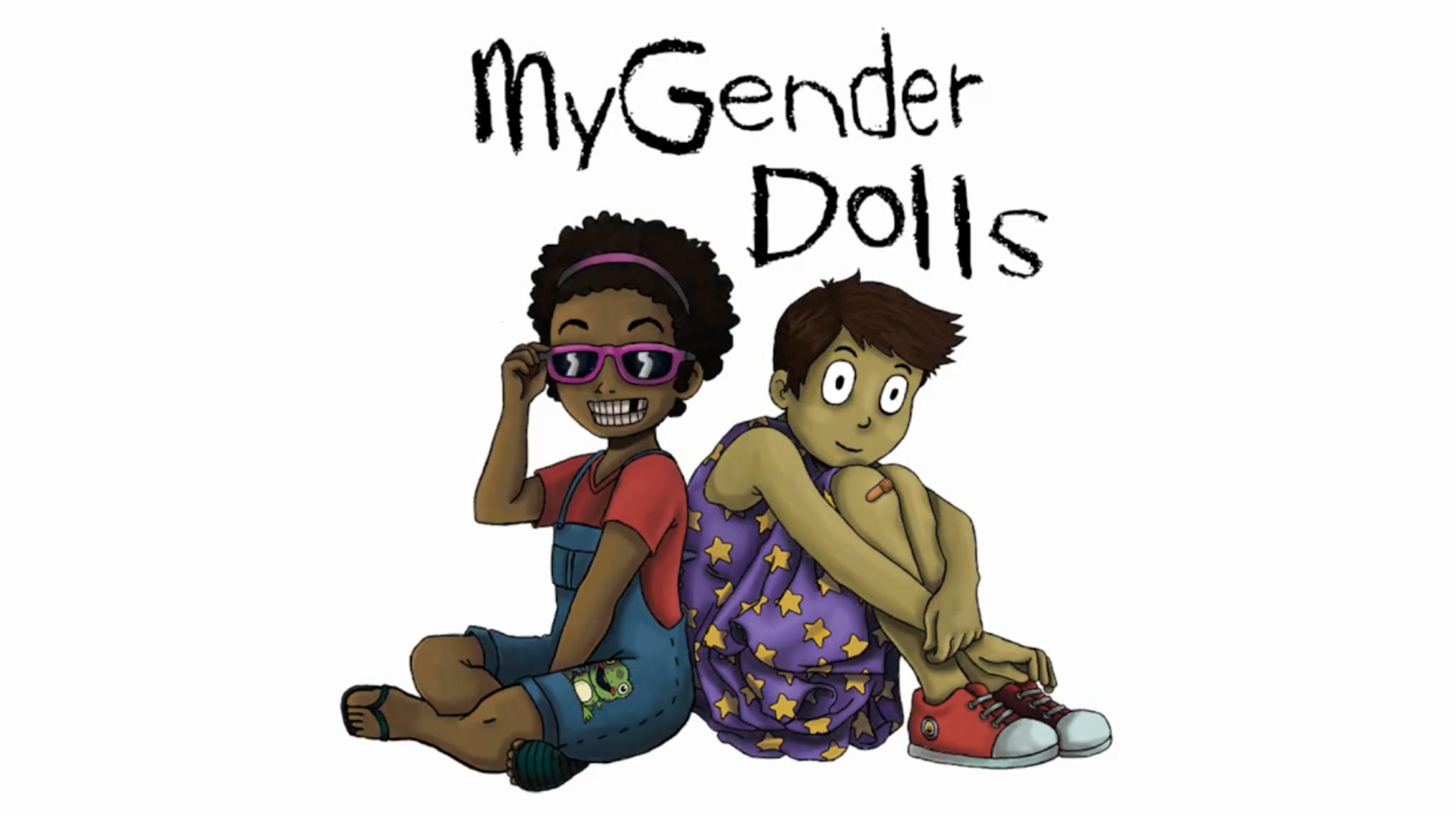
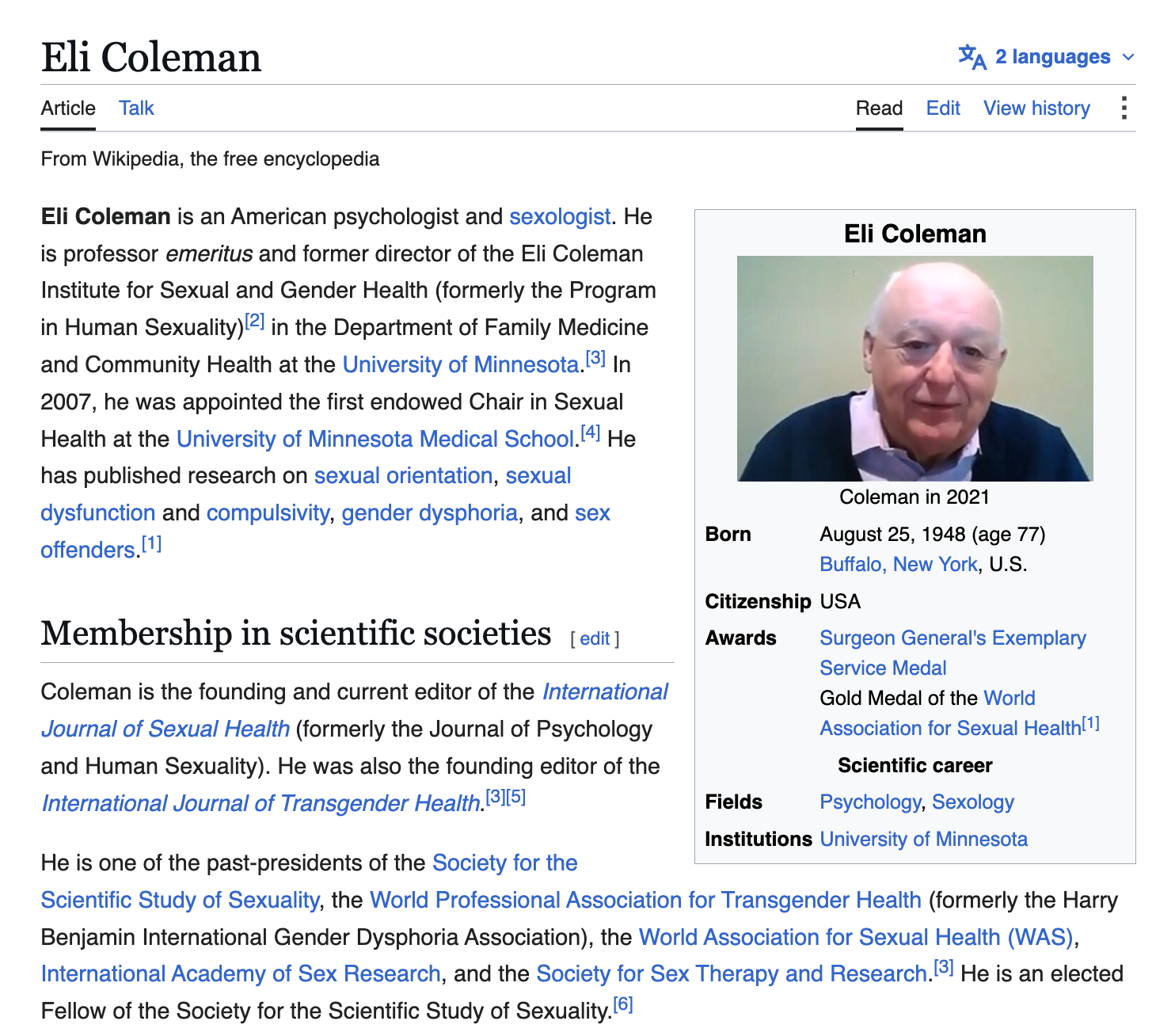
MyGender Dolls is a University of Minnesota project (later commercialized) developing customizable paper-style dolls and related materials as a “therapeutic” tool for transgender and “gender diverse” children ages 4–10. It originated in the university’s Eli Coleman (jew) Institute for Sexual and Gender Health / National Center for Gender Spectrum Health and emphasizes gender-affirming approaches in which identity is treated as independent of biological sex/anatomy.
The concept began with psychologist Rachel Becker-Warner, PsyD. It was developed with Dianne Berg (jew), PhD (NCGSH co-director and licensed psychologist working with young patients), and Ashley Finch (communications specialist and artist described in related coverage as transgender/gender-diverse identified). The dolls were presented at the 2019 USPATH symposium (U.S. arm of WPATH) and featured in a 2020 University of Minnesota Discovery Magazine article titled something like “A Reflection of Me.”
Early prototypes received funding from a California Institute of Contemporary Art grant. During COVID, the team shifted toward an app version usable at home during telehealth sessions with caregiver and therapist support. The project remained research-oriented for years, with plans to hire more transgender and gender-diverse artists for additional designs and to distribute the tool to “gender-competent” therapists.
In February 2024, the National Center for Gender Spectrum Health posted on Instagram recruiting “transgender and gender diverse children between the ages of 5 and 10 years old and their parents” for focus groups/hands-on activities with the dolls to “help talk about gender and bodies.” Compensation was $20–$60 per group. Families would meet multiple times to play with the dolls and provide feedback.
The dolls are two-dimensional, paper-doll style figures. Key features described across university materials and the project site include:
Bodies varying in age, shape, and skin color for representation.
Over 100 options for clothing, hair, and accessories (each clothing item drawn in multiple versions so outfits fit any body).
Choices of external genitals and internal reproductive organs, which children layer on. Explicit rationale in earlier materials: to “show that their gender identity is valid no matter what parts they have” and to address beliefs such as “I’m not a ‘real’ boy because I don’t have these private parts.”
Developers framed this as making abstract gender concepts tangible and interactive, helping children express themselves, explore feelings about bodies, promote resilience against stigma, and support “gender exploration” in a play-based way. Berg was quoted saying that what makes someone “real” is how they think and feel, not body parts, and that the tool helps counter societal messages that could cause shame.
The commercial version (launching 2026) is described as including doll bases, expansion packs, and training materials. It is marketed as community-informed, research-driven, culturally attuned, and “grounded in gender-affirming clinical practices.” Intended users expanded to mental health providers, school counselors and educators, pediatricians, and other clinicians/educators working with gender-diverse children in clinical and educational settings.
Controversy and University ResponseDetails spread widely in December 2024 via conservative/social media accounts (including Libs of TikTok), Daily Wire, College Fix, Campus Reform, Alpha News, and others. Critics described the dolls as inappropriate for young children, a form of ideological indoctrination or “grooming,” and an example of sexualizing minors by focusing on genitals and reproductive organs in a therapeutic/play context with 4- to 10-year-olds. The American College of Pediatricians (a group critical of gender-affirming care for minors) called them “just a grooming tool” with “no place in an ethical medical care world,” arguing children recognize biological sex early and that such interventions can cause confusion/anxiety.
The university responded by altering or removing content from its website: the detailed project page was shortened or changed, a related Discovery Magazine article disappeared, a promotional video was taken down, crowdfunding appeals and individual names were removed, and descriptions were sanitized. A spokesperson stated that MyGender Dolls are therapeutic tools for licensed therapists to use with patients and parents/caregivers to help children who find it difficult to express themselves; that research (including early-stage focus groups) was ongoing; and that the tools were not then available for use. Updates were said to reflect the project’s current status.
The current official UMN project page appears to return a 404 or has been further de-emphasized. A separate commercial site (mygenderdolls.com) launched waitlist sign-ups for a 2026 release aimed at professionals.
FundingPrototypes had external grant support. The project received a cash prize (up to ~$3,000) from the university’s MINCORPS program (tied to the Great Lakes I-Corps Hub, which has had National Science Foundation support) and an award from the university’s Early Innovation Fund (up to ~$10,000). The broader institute reported substantial research grant funding. A crowdfunding campaign targeting $25,000 raised only a small fraction. The Upper Midwest Law Center submitted a data request in early 2025 seeking funding sources and related communications, citing public interest in whether taxpayer/student resources supported the work aimed at young children. University statements have indicated research used institutional resources but claimed commercialization is not directly taxpayer-funded; exact breakdowns remain contested/opaque in public reporting.
Current Status (mid-2026)The commercial product is scheduled to launch in 2026 with a waitlist open for clinicians, educators, researchers, and supporters. It continues to be framed as a play-based therapeutic resource promoting representation, resilience, confidence, and joy for trans and gender-diverse children. Criticism persists, including petitions and renewed social media attention highlighting the age range (now explicitly 4–10), school/educator targeting, and genital customization features. No large-scale independent clinical outcome data establishing efficacy or long-term effects of this specific tool appears to have been publicly released in the reporting.
University of Minnesota’s National Center for Gender Spectrum Health (NCGSH).
The National Center for Gender Spectrum Health (NCGSH), or more recently referred to and rebranded as the National Center for Gender Health (NCGH), is an initiative of the Eli Coleman Institute for Sexual and Gender Health (ISGH) within the University of Minnesota Medical School’s Department of Family Medicine and Community Health.
It operates in Minneapolis (associated with the ISGH address at 1300 South 2nd Street) and focuses on research, education, clinical innovation, advocacy, and policy work related to the well-being of people across the gender spectrum—including cisgender, transgender, and gender-diverse individuals.
The broader Program in Human Sexuality (the predecessor to ISGH) has deep roots at the University of Minnesota, dating to the early 1970s, with a long involvement in sexual and gender health (including early work related to transgender care). The National Center itself emerged as a philanthropically supported initiative. It was established or formalized through fundraising efforts tied to a roughly $5 million campaign completed around the Program’s 50th-anniversary period (celebrated circa 2021), which also supported endowed chairs and related positions.
ISGH itself was renamed/rebranded as the Eli Coleman Institute for Sexual and Gender Health in recent years. The Center has been described as focusing on building strengths, community relationships, advocacy, and innovative ideas to improve the well-being of gender-diverse people across the lifespan. In a more recent annual report (covering 2025 activities), it formally launched an updated name (“National Center for Gender Health”), icon, mission, and vision.
Leadership has included G. Nic Rider, PhD, LP (Associate Professor; they/them pronouns), who has served as Director. Rider is a licensed psychologist with expertise in health disparities, minority stress, resilience, and affirmative care for sexual and gender diverse people; they have also held roles coordinating adult gender services within ISGH and contributed to standards such as the WPATH Standards of Care Version 8. Other affiliated faculty and clinicians (e.g., Dianne Berg, PhD, LP, associated with child and adolescent gender care and co-development of key frameworks) have been involved.
Mission and VisionCurrent stated mission: Collaborate for sexual and gender justice by, for, and with transgender and gender diverse people by dismantling systemic barriers and advancing their health, equity, and well-being through intersectional research, translational scholarship, and dedicated advocacy.
It’s Vision statement reads: “A fundamentally transformed society where all transgender and gender diverse people achieve sexual and gender liberation and autonomous well-being, supported by equitable systems informed by intersectional research and affirming policy.”
Earlier framing emphasized promoting well-being across the gender spectrum and addressing stigma, discrimination, access barriers, health disparities, and the need for specialized training. The Center has argued for a paradigm shift that affirms diverse gender identities as part of normal human variation, prioritizes psychosocial needs and outcomes (beyond a primary focus on medical interventions), and develops research-based, developmentally appropriate, trans-affirmative approaches across the lifespan (children, adolescents, young adults, middle age, and older adults).
It’s ‘Core Framework’ claims: Gender Affirmative Lifespan Approach (GALA™)A signature contribution is the Gender Affirmative Lifespan Approach (GALA™), an innovative therapeutic and clinical framework developed at the Center. It is grounded in research linking stigma, discrimination, and lack of access to care with negative health outcomes for transgender and gender-diverse (TGD) people. GALA aims to counteract internalized stigma, support positive gender identity development, and promote mental health and well-being through developmentally tailored interventions.
Core therapeutic components include:
Gender literacy — Learning to identify societal gender “rules” and clarify one’s own beliefs and values; understanding distinctions and interconnections among sex assigned at birth, gender identity, expression, and orientation, as well as oppressive practices.
Building resiliency — Cultivating adaptive coping strategies and supportive networks to resist gender-based stigma and discrimination.
Moving beyond the binary — Recognizing and embracing the full range of gender identities, expressions, and experiences (including nonbinary and genderqueer identities).
Pleasure-oriented positive sexuality (POPS) — Promoting sex-positive, gender-affirming approaches to sexuality and pleasure (countering historical over-focus on negative outcomes).
Connections to medical interventions (when desired) — Supporting access to competent, affirming care while addressing historical and ongoing medical stigma/gatekeeping.
“Philosophical values” underlying GALA include:
Transaffirmative (viewing transgender identities as normal variations, not disorders).
Transparency (addressing historical gatekeeping and being open about roles, biases, and processes such as referral letters).
Intersectionality (attending to race, class, religion, age, location, and other identities in shaping experiences).
Across the lifespan (accounting for developmental stages and generational differences in stigma, narratives, and access).
Interdisciplinary (involving mental health providers, physicians, surgeons, social workers/navigators, and community resources).
Empiricism (grounded in evidence-based scholarship).
The approach is applied differently for children, adolescents, young adults, adults, and older adults. The Center and affiliated researchers have also developed or adapted assessment measures aligned with these principles (available for free under certain agreements), such as spectrum-inclusive versions of gender dysphoria scales, family environment measures, recalled childhood gender identity/experience scales, body image scales, genderqueer identity scales, and sexual functioning indices.
Activities and Impact:
Research and scholarship: Population-based studies (e.g., involving Minnesota Student Survey data on gender-diverse youth), mixed-methods work on disparities and resilience, development of measures and frameworks, and community-engaged or participatory approaches. Publications and presentations appear at venues such as WPATH and other professional conferences.
Education and training: Contributions to graduate certificates (e.g., Transgender and Gender Diverse Health Certificate offered in collaboration with the College of Continuing and Professional Studies), courses on care of TGD children/adolescents, provider training, continuing education, and workshops. Faculty have been involved in developing or contributing to broader standards of care.
Clinical and translational work: Linked to ISGH’s clinical services through the M Health Fairview Sexual and Gender Health Clinic and related gender care programs. Emphasis on affirmative, lifespan-oriented practices.
Advocacy, policy, and community engagement: Policy briefings and reports (including collaboration with the Minnesota Department of Health), system-wide policy work on gender-affirming care, legal clinics for name/gender marker changes (with partners), community events, social media campaigns, intergenerational events, and partnerships with local organizations (e.g., Minnesota Transgender Alliance, Transforming Families, OutFront Minnesota, and others). Recent efforts have included responses to evolving policy landscapes and public education challenging myths.
The Center positions itself as advancing intersectional, evidence-informed, affirming approaches amid ongoing debates about access, evidence, and policy regarding gender-related care. It collaborates locally, nationally, and internationally and supports learners from high school through postdoctoral levels while centering community expertise and lived experience.
Still think these institutions can be reformed or fixed? Think again. The all need to be burned to the ground.
This isn’t a university teaching the truth about anything. It’s a mental institution with jewish leadership advancing the normalization of pedophilic behavior among adults toward children. If a K12 school teacher were doing this in a classroom setting with their students, they would be arrested.
If you send your kids to college or allow them to accept these kinds of behaviors anywhere, you are the problem.
This is a ZILLION times worse than a doll named Skipper who was around in the 1970s. Anyone remember her?
Gleaned from internet:
Growing Up Skipper is a controversial 1975 Mattel doll that grew taller and developed breasts when you turned her left arm. She was marketed as two dolls in one to simulate puberty, but faced heavy criticism and was eventually redesigned.How the Mechanism WorkedThe Twist: Rotating her left arm counterclockwise or forward made her grow about an inch taller and pushed out a small bustline from her rubber torso.The Reversal: Turning her arm the opposite direction retracted the breasts and shortened her body back to a prepubescent look.Controversy and LegacyPublic Reaction: Many parents and consumer groups criticized the toy for awkwardly and mechanically sexualizing a young character.Discontinuation: Due to the weird and unpopular nature of the physical transformation, the feature was short-lived. Mattel later replaced her with "Super Teen Skipper" in 1979, featuring a normal, permanent body mold.


This is a ZILLION times worse than a doll named Skipper who was around in the 1970s. Anyone remember her?
Gleaned from internet:
Growing Up Skipper is a controversial 1975 Mattel doll that grew taller and developed breasts when you turned her left arm. She was marketed as two dolls in one to simulate puberty, but faced heavy criticism and was eventually redesigned.How the Mechanism WorkedThe Twist: Rotating her left arm counterclockwise or forward made her grow about an inch taller and pushed out a small bustline from her rubber torso.The Reversal: Turning her arm the opposite direction retracted the breasts and shortened her body back to a prepubescent look.Controversy and LegacyPublic Reaction: Many parents and consumer groups criticized the toy for awkwardly and mechanically sexualizing a young character.Discontinuation: Due to the weird and unpopular nature of the physical transformation, the feature was short-lived. Mattel later replaced her with "Super Teen Skipper" in 1979, featuring a normal, permanent body mold.